Rock Pooling
A Simple but rich learning activity
We have been rock pooling plenty of times before.
We have wandered around the beach, peered into pools, looked for crabs, picked up shells, and hoped something exciting might suddenly appear. Sometimes it did. Sometimes we mostly found seaweed and a few little things darting about that we couldn’t name.
And that was still lovely.
But the first time we went rock pooling with a guide, it completely changed how we saw it.
Suddenly the beach felt much more alive. Not in a dramatic, magical sort of way, but in a very real one. There were things hiding in places we would never have thought to look. Tiny creatures tucked under stones. Different kinds of seaweed with names and uses. Little movements in the water that we would probably have missed before.
We found so much more than we ever had on our own.
I think the biggest difference was that someone showed us how to look properly. Not just where to look, but how to slow down, how to be gentle, and how to notice the small things. A rock pool can look empty at first, but if you wait, something usually moves. A tiny shrimp darts across. A crab shifts slightly. Something that looked like a bit of weed turns out to be alive.
It made us realise that we had probably walked past so much on previous beach days without ever knowing it was there.
One of the most exciting things we learned was that some seaweed can be eaten straight from the sea. That was definitely one of those moments where the children were fascinated and I was fascinated too. It felt wild and brilliant, but also very much like something you only do when you are with someone who knows exactly what they are talking about.
That was part of the learning too, really. Nature is exciting, but it is also something to respect. It is not about grabbing at everything or assuming you know what something is. It is about looking carefully, asking questions, and learning from people who understand that environment better than you do.
Since that guided session, we have been much braver when rock pooling by ourselves.
Before, we were more hesitant. We would look into the pools, but I do not think we really explored them properly. I was never quite sure whether we should put our hands in, or whether moving a stone would disturb something, or whether we were doing it wrong.
Having a guide show us how to do it carefully made such a difference.
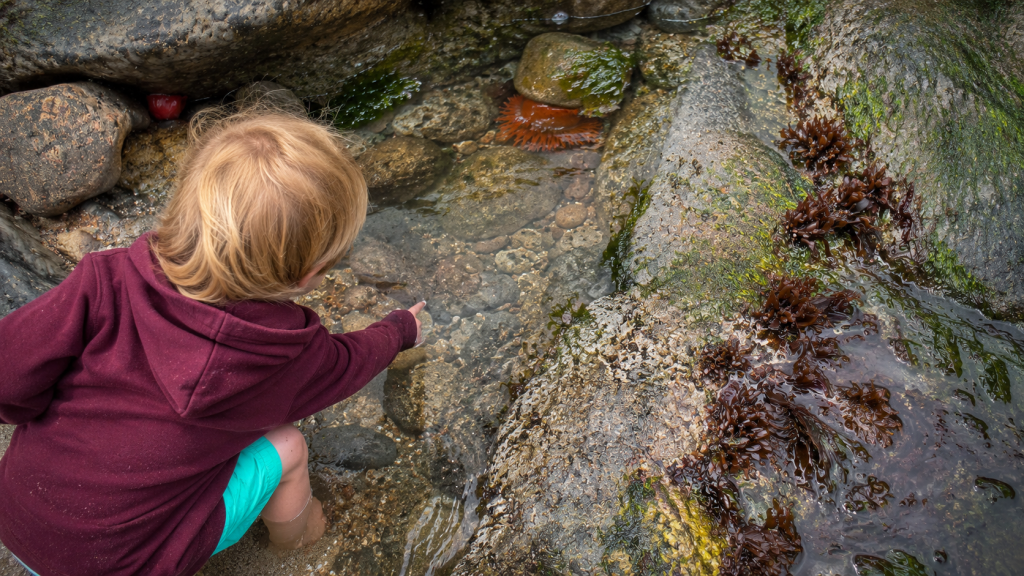
Now we are more confident gently putting our hands into the water. We are more willing to lift a stone and see what is hiding underneath, then put it back carefully where it came from. We look more slowly. We ask better questions. We notice more.
It has made rock pooling feel less like a lucky dip and more like a little investigation.
We also used iNaturalist, which is a brilliant app for identifying wildlife finds. It is really helpful when you are looking at something and have absolutely no idea whether it is a plant, an animal, an egg case, or just a strange bit of seaweed. You can take a photo, record what you found, and start learning the names of the things you have spotted.
I really like that because it carries the learning on after the beach. You can come home and look again at what you found. You can compare things. You can start to recognise them next time. It gives children the message that their discoveries matter, even the tiny ones.
We took part in the National BioBlitz with The Rock Pool Project, and it was so much fun. If you live near a rocky beach, or you are visiting one, it is worth checking whether there is a rock pooling event or project nearby. Having someone knowledgeable there made such a difference to us, and it gave us the confidence to keep exploring afterwards.
For children, rock pooling is full of learning without needing to turn it into a lesson.
They are observing, comparing, predicting, waiting, noticing patterns, and asking questions. They are learning about habitats, tides, camouflage, movement, seaweed, shells, safety, and how living things protect themselves. They are also learning patience, which is probably one of the hardest parts.
You cannot rush a rock pool.
Sometimes you have to sit there and watch for a while. At first it looks still. Then one thing moves, then another, and suddenly the pool that looked empty is full of life.
That kind of slow looking is such a valuable skill. It is so different from the fast, instant sort of entertainment children are often surrounded by. Rock pooling asks them to pause. To be curious. To be careful. To wonder what might be hiding just out of sight.
And it does all of that while they are outdoors, barefoot or sandy, with wet sleeves and wind in their hair.
That is my favourite kind of learning.
The sort that looks ordinary from the outside, but is actually doing so much. A beach day becomes science, confidence, nature study, movement, conversation, and memory making all at once.
Since going with a guide, I feel as though we have unlocked rock pooling a bit more. We still do not know everything. Not even close. But we know how to begin looking. We know to check under stones carefully. We know to watch the water for movement. We know that seaweed is far more interesting than we first thought.
And we know that sometimes the best learning happens when someone simply shows you how much there is to notice.