Making Dandelion Honey: The Home Ed Experiment That Actually Tasted Amazing
I’ll be honest, when we first decided to make dandelion honey, I wasn’t completely convinced.
It sounded like one of those lovely home education ideas that looks beautiful online, makes a lot of sticky mess, and then tastes vaguely like boiled grass.
But I promise, the recipe is coming — and it is absolutely worth trying.
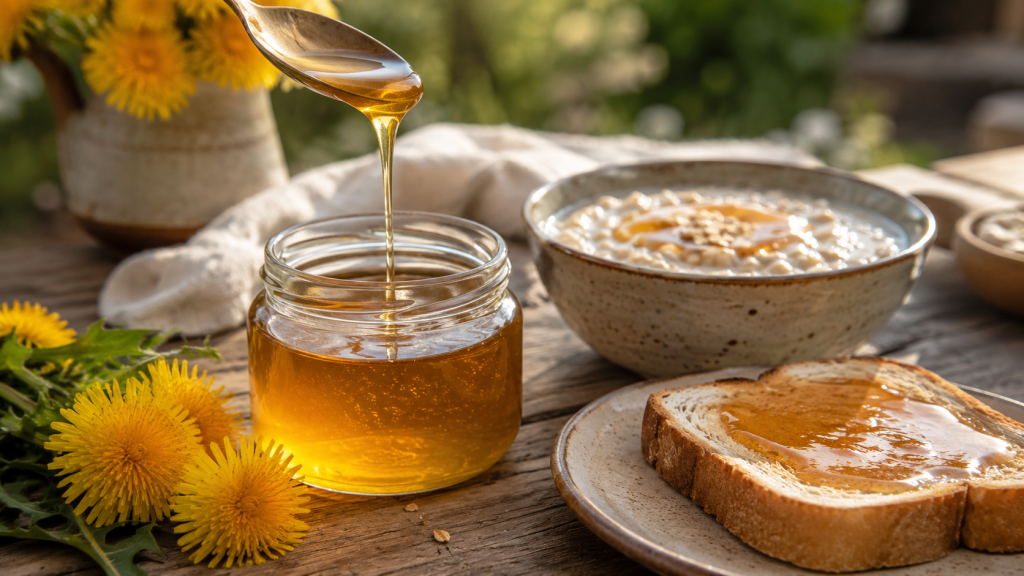
Because somehow, from a handful of dandelions, some sugar, lemon and water, we made something golden, sticky and surprisingly similar to normal honey.
I was genuinely surprised by how nice it tasted. It was sweet, floral and perfect on toast. Ben was amazed that something we had picked from outside could be turned into something that looked and tasted so much like honey.
And because it is made from dandelions rather than by bees, it is vegan too.
Why We Tried It
This started as one of those “shall we just give it a go?” home ed activities.
We had seen lots of dandelions out and about, and instead of just walking past them, we started noticing them properly. Where were they growing? Why were there so many? Why do bees like them? Which ones looked fresh? Which ones had already started to close?
It turned a normal walk into a little foraging trip.
We talked about only picking from safe places, away from roads, sprayed grass and places where lots of dogs go. We also made sure we left plenty behind for the bees, because dandelions are useful early flowers for pollinators.
By the time we got home, we had a tub of bright yellow flower heads and a child who was very invested in whether we could actually turn them into honey.
The Home Ed Bit
This was one of those activities that looked simple, but had loads of learning tucked inside it.
There was science in looking at the flowers, simmering them, soaking them, straining them and watching the liquid thicken.
There was maths in counting the flower heads and measuring the sugar and water.
There was literacy in following the recipe, talking through the steps and describing what we could smell and taste.
There was also a bit of patience involved, because dandelion honey is not instant. It has a few stages, and some of them are not very exciting if you are five and waiting for “honey” to magically appear.
But that is part of the learning too.
Sometimes learning looks like sitting at a table. Sometimes it looks like a sticky saucepan, a sieve full of soggy dandelions, and a child asking every three minutes if it is honey yet.
Did It Actually Taste Like Honey?
This was the bit I was most unsure about.
I expected it to be nice enough, maybe in a “we made this so we are proud of it” sort of way.
But it was actually nice.
Not exactly the same as normal honey, because obviously it is not made by bees, but much closer than I expected. It had that golden sweetness and a gentle floral taste. It looked like honey, poured like honey, and worked beautifully on toast and porridge.
Ben was very pleased with himself.
I was also quite pleased, mainly because I had mentally prepared myself for boiled lawn syrup and instead got something I would happily eat again.
Dandelion Honey Recipe
Right, as promised — here is the recipe.
You will need:
- Around 2 cups of dandelion flower heads
- 2 cups of water
- 2 cups of sugar
- 1 lemon, sliced or juiced
- A clean jar
- A sieve or muslin cloth
Before you pick
Only pick dandelions from somewhere you know is safe. Avoid roadsides, sprayed grass, and places where dogs are likely to have been.
Give the flowers a gentle shake outside so any tiny insects can escape, and try to leave plenty of dandelions behind for the bees.
How We Did It
First, we picked bright, open dandelion heads. We avoided any that looked old, damaged or half closed.
When we got home, we rinsed them and removed as much of the green stem as we could. The yellow petals are the bit you really want, because too much green can make the syrup taste bitter.
Then we put the dandelion flowers into a pan with the water and lemon. We brought it to a gentle simmer and let it bubble for a little while until the water turned golden and started to smell faintly floral.
After that, we left it to soak so the dandelion flavour could really come out.
Once it had soaked, we strained the liquid through a sieve, pressing the flowers down to get as much of the golden liquid out as possible.
Then we added the sugar and put it back on the hob.
This was the part where it slowly started to feel like magic. The thin liquid gradually became darker, sweeter and more syrupy.
We stopped when it was still quite thin, and I’m glad we did, because it thickened up a lot as it cooled. I would definitely say don’t wait until it looks like thick honey in the pan, or you might accidentally end up with dandelion toffee.
Once we were happy with it, we poured it into a clean jar and let it cool.
And there it was — our own little jar of dandelion honey.
Sharing It
One of the loveliest parts was sharing it afterwards.
We gave some to neighbours and family, which made the whole thing feel even more special. There is something very sweet about a child proudly handing over something they helped make and explaining that it came from dandelions.
It gave Ben a chance to talk about what we had done, remember the steps, and share a bit of our home ed day with other people.
And everyone was surprised that it was actually nice.
Not “that’s nice because a child made it” nice.
Actually nice.
How We Ate It
We tried it on toast first, because that felt like the proper test.
It passed.
Then we stirred it into porridge, which made breakfast feel a bit more special. It added a lovely sweetness and made the whole activity carry on beyond the making.
That is one of my favourite things about activities like this. It was not just something we did and then forgot about. We kept using it, talking about it, and remembering that we had made it ourselves.
Would We Make It Again?
Definitely.
It was simple, seasonal, cheap and full of learning. It turned a normal walk into foraging, a saucepan into a science experiment, and a few dandelions into something golden and delicious.
Home education does not have to be complicated. Sometimes it is just noticing what is growing around you, wondering what you can do with it, and giving it a go.
Even if you do start off slightly suspicious that it might taste like boiled grass.